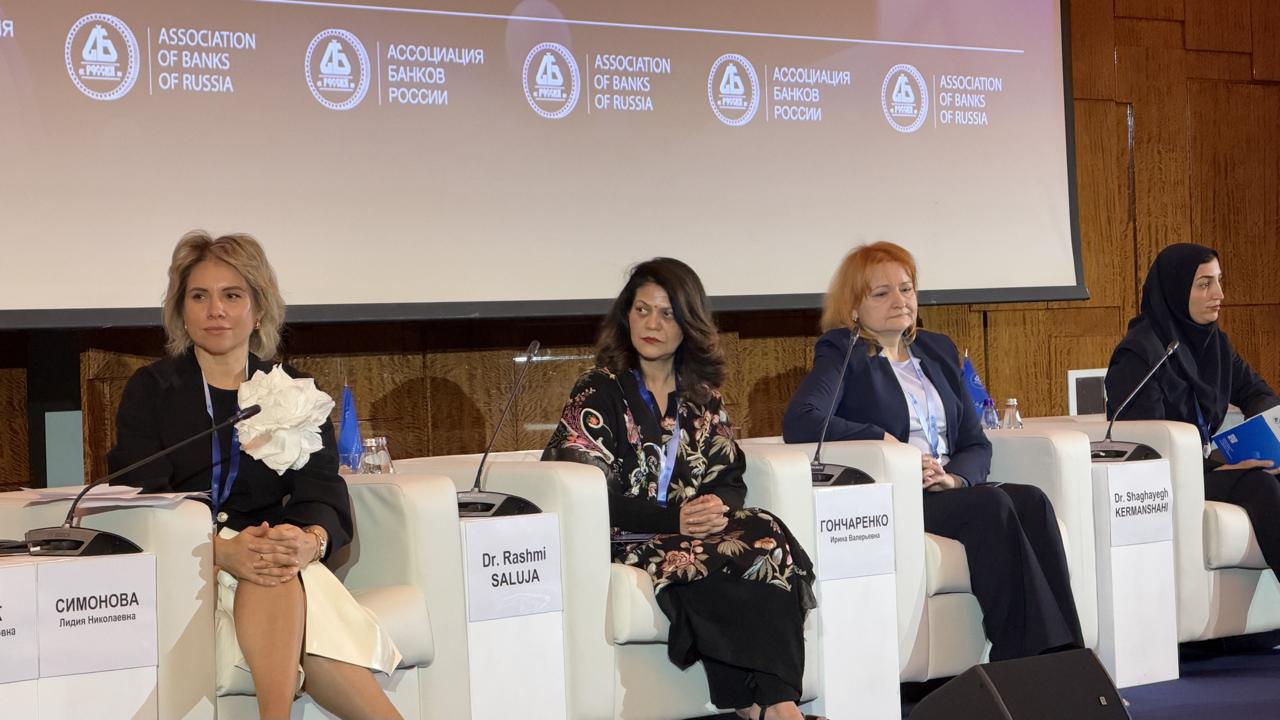
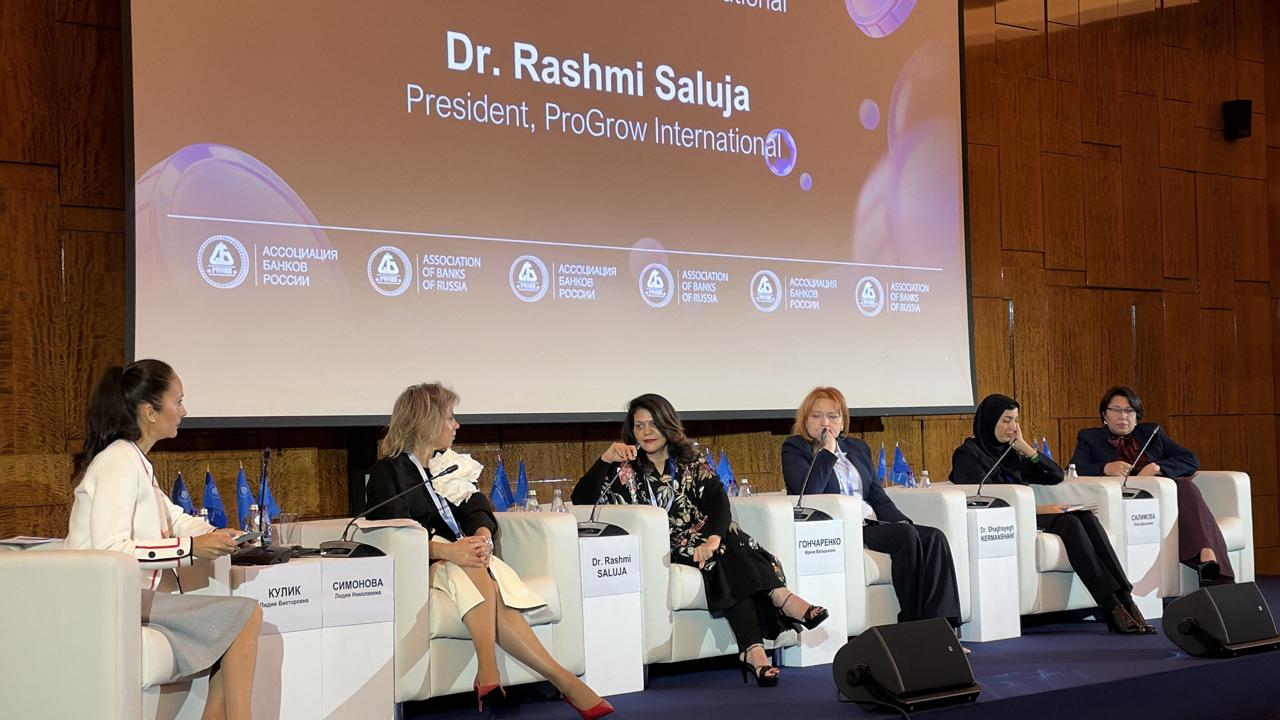
Moscow, Russia: Dr. Rashmi Saluja shared her insights on women’s financial empowerment, economic resilience, technological innovation, and inclusive growth at the International Women in Finance Forum in Moscow, Russia. Organised by the Association of Banks of Russia, the international conference brought together leaders and experts to discuss women’s leadership, financial innovation, digital transformation, and global cooperation.
Speaking at the forum, Dr. Saluja emphasised the significant yet often overlooked contribution of women to India’s economy, particularly through their financial management of household resources. She highlighted how women demonstrate exceptional financial acumen by managing household budgets, optimising limited resources, and navigating everyday economic challenges with discipline and foresight.
“The true strength of the Indian economy lies not in formal education but in the informal financial mastery of women who run every household, managing budgets that extend 15 days beyond the monthly cycle—an unpaid contribution equivalent to 45 days of activity that makes the nation’s actual GDP far higher than official figures suggest,” said Dr. Rashmi Saluja.
She stressed that women’s financial capabilities deserve greater recognition in economic discussions and policymaking. According to her, the ability to manage household finances amid uncertainty reflects a form of practical financial literacy that strengthens families and contributes to the resilience of the broader economy.
Dr. Saluja also highlighted India’s considerable consumer potential and historical contributions to disciplines such as mathematics and medicine, noting that the country’s capabilities are often underestimated in global narratives. Drawing parallels between India and Russia, she observed that both nations possess the resilience to transform challenges into opportunities.
“Rather than seeking preferential treatment or geopolitical control, India’s future strength will come from collective growth, indigenous technology, and preventive healthcare, sharing knowledge to stabilize itself without defining others,” she added, emphasising collaboration, innovation, and knowledge-sharing as important pillars of sustainable development.
Addressing the evolving relationship between technology and younger generations, Dr. Saluja advocated a shift from conventional instruction towards dialogue, mutual respect, and intergenerational collaboration. She acknowledged that young people possess a strong understanding of emerging technologies and future trends, making it essential for experienced leaders to listen to their perspectives and support their aspirations.
“Young people don’t need uninvited advice; they understand technology and the future better than we do. To bridge the generational gap, we must stop preaching and start listening, showing them respect. Our role is not to hold them back from becoming ‘robots,’ but to use our experience to help them remain humane,” said Dr. Saluja.
She further underlined the importance of ensuring that technological advancement remains purposeful and aligned with societal needs. She emphasised that India must strengthen its indigenous technological capabilities and ensure that innovation contributes meaningfully to national progress rather than positioning the country merely as a consumer market.
“Technology should be need-oriented, serving the country’s progress rather than turning us into a mere consumer market. Ultimately, we must make ourselves relevant so that the innovations of Gen Z benefit everyone, connecting rural areas to urban centres,” she added.
Dr. Saluja’s participation at the forum underscored the importance of recognising women’s economic contributions, promoting responsible technological development, and building bridges between generations. Her remarks highlighted a vision of progress in which innovation is guided by human values, economic empowerment, and inclusive opportunities.
The discussions reinforced the need for collaborative approaches that enable countries to strengthen their economies, expand access to technology, and create sustainable opportunities for communities across geographical and socioeconomic boundaries.